


In a world where automation, robotics, and artificial intelligence are reshaping almost every industry, many workers worry about the future of their careers. But while some jobs are being replaced by algorithms, others remain AI-proof—jobs where human skill, hands-on expertise, and real-time problem solving can never be automated. This job board blog on AI proof jobs highlights three of the strongest career paths that continue to pay well and remain in high demand across the United States: manual machinists, equipment mechanics, and certified autobody technicians.
These roles require technical ability, precision, and physical problem-solving that AI simply cannot replicate. While many employers are adopting new technologies, skilled trades still depend on experienced professionals who can diagnose, repair, and build in ways machines are not yet capable of doing.
How AI Is Changing the Job Market — and Why Skilled Trades Are Safe
AI has already transformed customer service, writing, data entry, accounting, transportation logistics, and even basic programming tasks. Routine work is becoming automated quickly. But industries that rely on hands-on craftsmanship, mechanical expertise, and physical repair continue to see strong demand and high job stability.
That’s why more employers say it’s becoming extremely hard to find a good manual machinist, leading to competitive pay and steady career growth. The same applies to shops looking for an experienced equipment mechanic or companies hiring for a certified autobody tech. These fields require years of experience, specialized training, and a mechanical intuition that AI cannot replace.
1. Manual Machinists: Precision Experts Who Remain AI-Proof
Manual machinists play a critical role in manufacturing, aviation, automotive, defense, and custom fabrication. Even with CNC machines becoming more advanced, manual machining requires human judgment and dexterity.
Why Manual Machinists Are AI-Proof
- Precision fitting and one-off custom parts demand hands-on expertise
- Many industries rely on legacy machines that require manual operation
- Repairs, adjustments, and modifications require human decision-making
- Tight tolerances and custom jobs can’t be automated easily
Average Pay Scale
Manual machinists often earn competitive wages, generally ranging from $22–$38 per hour, depending on experience, certifications, and industry sector. Skilled machinists working on aerospace or medical components may earn significantly more.
Job Outlook
Demand for manual machinists continues to grow due to:
- Retiring workforce
- Shortage of young workers entering skilled trades
- Growing manufacturing output in the U.S.
- Expanding aerospace and defense sectors
City Job Data Snapshot
Here’s a general idea of machinist demand in several U.S. cities:
- Houston, TX – Strong demand in oil, energy, and equipment manufacturing
- Cleveland, OH – High job availability in industrial and steel manufacturing
- Phoenix, AZ – Growing aerospace and tech-manufacturing machinist needs
With so many employers reporting they find it hard to find a good manual machinist, wages and hiring incentives continue to rise.
2. Equipment Mechanics: Essential Workers Who Keep America Running
From construction machines to agricultural equipment and industrial engines, equipment mechanics keep critical industries functioning. AI can’t diagnose every mechanical failure, nor can it physically repair or rebuild machines.
Why Equipment Mechanics Are AI-Proof
- Real-time troubleshooting requires human observation
- Heavy equipment repairs involve physical labor and welding
- Blueprint interpretation and modification need human judgment
- Every machine failure is different AI cannot predict all breakdowns
Average Pay Scale
Equipment mechanics earn $24–$42 per hour, with higher wages in heavy-duty diesel, mining equipment, aviation ground support, and municipal fleets.
Specialized technicians—like those working on hydraulics or diesel injection systems—earn the highest pay.
Job Outlook
Companies across industries are looking for an experienced equipment mechanic because:
- Large construction projects are increasing nationwide
- Supply chain delays require more repairs instead of replacements
- Skilled technicians are retiring faster than new workers entering the field
City Job Data Snapshot
Demand remains high across:
- Denver, CO – Construction and off-road equipment repairs
- Charlotte, NC – Freight, logistics, and transportation equipment
- Sacramento, CA – Agriculture and municipal equipment servicing
With continued growth in construction and energy sectors, equipment mechanics remain among the strongest AI-proof careers today.
3. Certified Autobody Technicians: Hands-On Specialists AI Cannot Replace
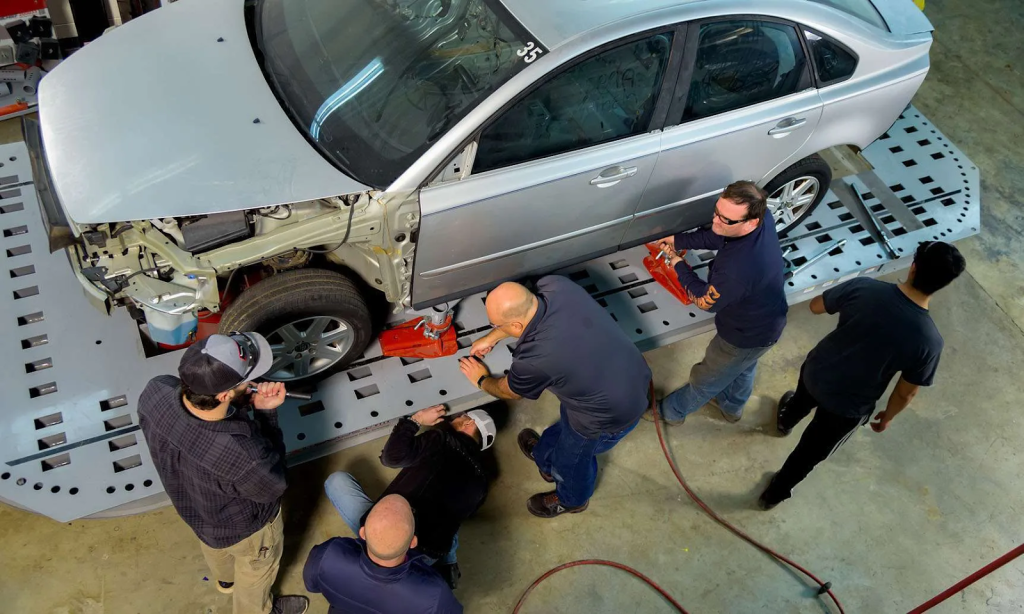
Autobody technicians repair and restore vehicles after collisions. As cars become more advanced, the need for skilled techs continues to increase—especially those trained in structural repair, aluminum welding, and post-accident calibration.
Why Autobody Technicians Are AI-Proof
- Every collision repair is unique
- Skilled technicians must physically reshape, weld, paint, and blend panels
- Sensors, cameras, and automotive electronics require hands-on calibration
- AI cannot replicate manual bodywork craftsmanship
Average Pay Scale
A certified autobody tech typically earns $23–$45 per hour, with additional income from flag-hour bonuses, insurance-based rates, and specialized certifications such as:
- I-CAR
- ASE
- Aluminum structural certifications
- OEM repair programs
Job Outlook
Shops everywhere are hiring for a certified autobody tech, because:
- More vehicles are on the road than ever
- Advanced driver assistance systems require expert repairs
- Collision centers report long wait times due to skilled worker shortages
City Job Data Snapshot
Strong hiring trends appear in:
- Detroit, MI – OEM and collision repair centers
- Dallas, TX – High accident rates increase repair demand
- Seattle, WA – Growing population and high car ownership
Autobody techs continue to earn strong wages and enjoy excellent job security.
Why These Skilled Trades Will Continue to Grow
This blog is about how AI is changing the job market, but the bigger story is how certain jobs will not just survive AI—they will thrive because of it. Equipment mechanics, machinists, and autobody technicians:
- Perform physical and mechanical work impossible to automate
- Make decisions based on experience, not algorithms
- Work on unique repairs and custom jobs AI cannot standardize
- Remain essential across construction, transportation, and manufacturing
As technology evolves, the tools used by these professionals may change, but their importance never will.
Final Thoughts: AI-Proof Jobs Are the Backbone of the Future Workforce
This job board blog on AI proof jobs demonstrates that while the digital economy grows, skilled trades remain one of the safest and most profitable long-term career options. Employers across the country continue to report shortages of qualified workers, whether they are:
- Looking for an experienced equipment mechanic
- Hiring for a certified autobody tech
- Or finding it hard to find a good manual machinist
For job seekers, this means rising wages, strong job security, and clear career advancement. For employers, it means competitive recruiting and long-term workforce planning.
If some one desires to be updated with latest technologies therefore he must be pay a visit this website and be up
to date all the time.
Excellent pieces. Keep posting such kind of information on your
blog. Im really impressed by your blog.
Hello there, You have performed an excellent job.
I’ll certainly digg it and personally recommend to my friends.
I am sure they’ll be benefited from this site.